
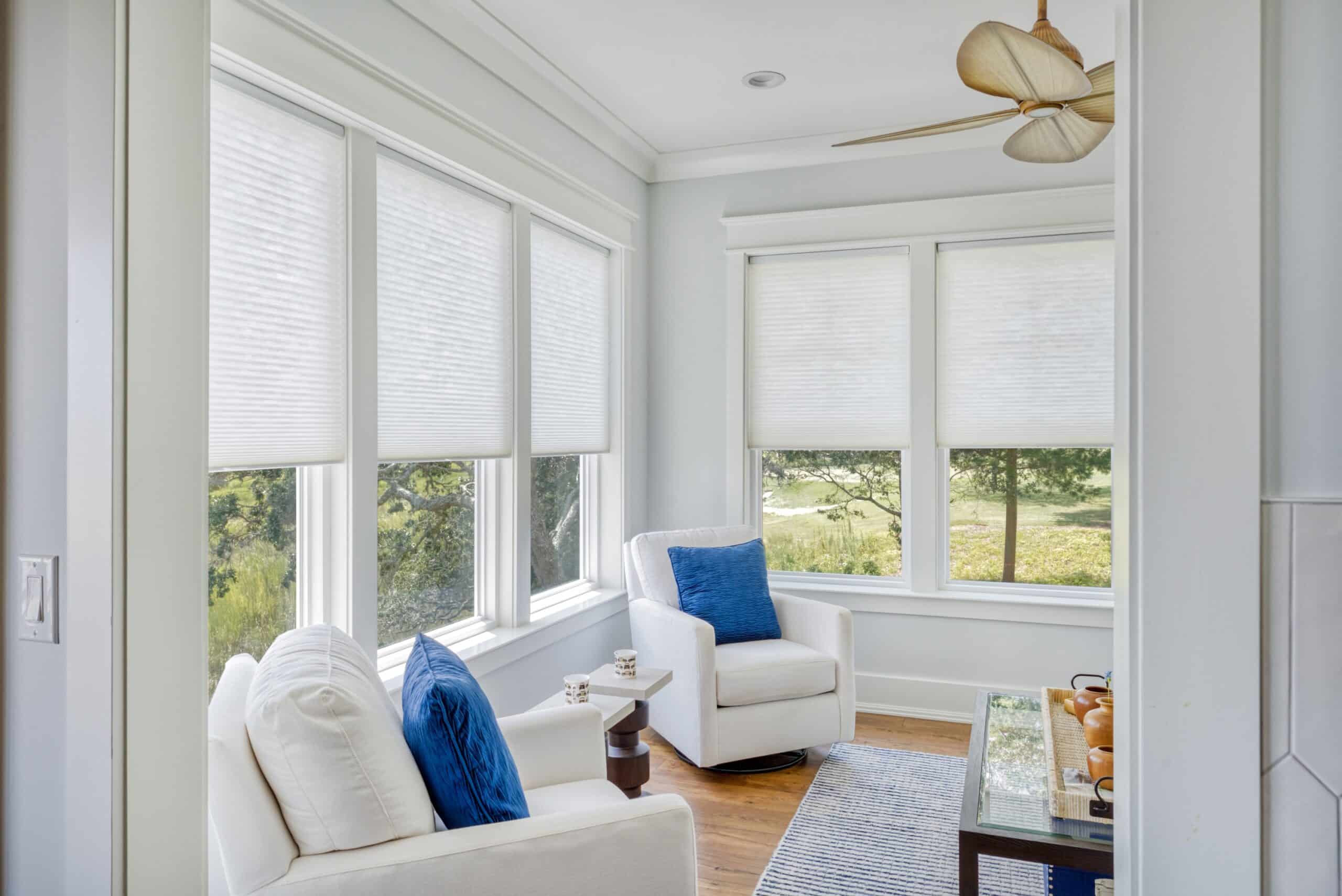
Cellular shades are known for energy efficiency, versatile light control and a clean appearance at the window, but there are also practical details to consider when choosing them. Fabric opacity, mounting style, window dimensions and even the number of shades used across a large window can affect how your finished window treatment looks and performs.
In this guide, we’re taking a closer look at cellular shades using real installation examples to explain how they stack, how light-filtering and room-darkening fabrics differ, what causes light gaps and when an inside or outside mount may work best.
If you’re ready to explore fabrics, features and Hunter Douglas collections, browse our custom honeycomb and cellular shades.
Are Cellular Shades and Honeycomb Shades the Same?
Yes. Cellular shades and honeycomb shades are two names commonly used for the same type of window treatment. Their pleated fabrics form honeycomb-shaped cells that trap air at the window, creating an insulating barrier that can help reduce heat transfer.
For a closer look at the terminology and construction, read our guide to cellular vs honeycomb shades.
How Do Cellular Shades Stack?
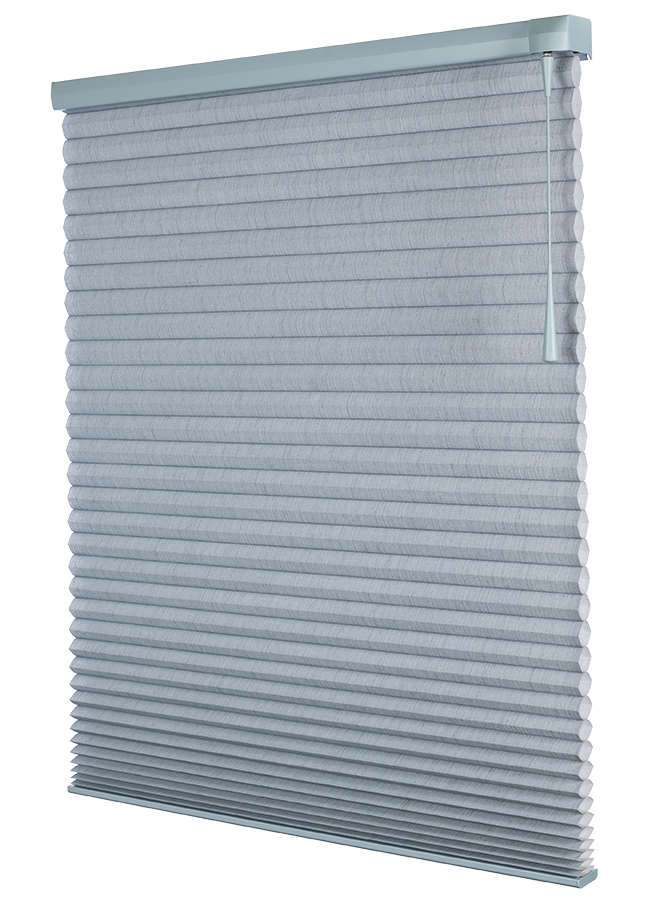
Unlike roller shades, which wrap fabric around a tube, traditional cellular shades feature horizontal fabric cells that collapse together as the shade rises. The pleated fabric stacks neatly toward the top of the window, opening the window to natural light and outdoor views.
The amount of stack can vary based on factors such as the size of the window, shade dimensions and configuration. Considering the finished stack is especially helpful on tall windows or anywhere preserving as much of the outdoor view as possible is important.
Light-Filtering vs Room-Darkening Cellular Shades
One of the most important choices when customizing cellular shades is fabric opacity. The right choice depends on how you use the room and how much natural light you want throughout the day.
Light-Filtering Cellular Shades
Light-filtering fabrics diffuse incoming sunlight to create a softer glow while reducing direct brightness at the window. They’re a great choice for living rooms, kitchens and other spaces where you want natural light without leaving the window completely uncovered.
Room-Darkening Cellular Shades
Room-darkening fabrics use more opaque materials to significantly reduce incoming light. They can be especially useful in bedrooms, nurseries and media spaces where controlling daylight is a priority.
It’s important to distinguish room darkening from complete blackout. Even with an opaque fabric, small amounts of light can enter around the perimeter of a window treatment. Fabric selection is only one part of creating a darker room.
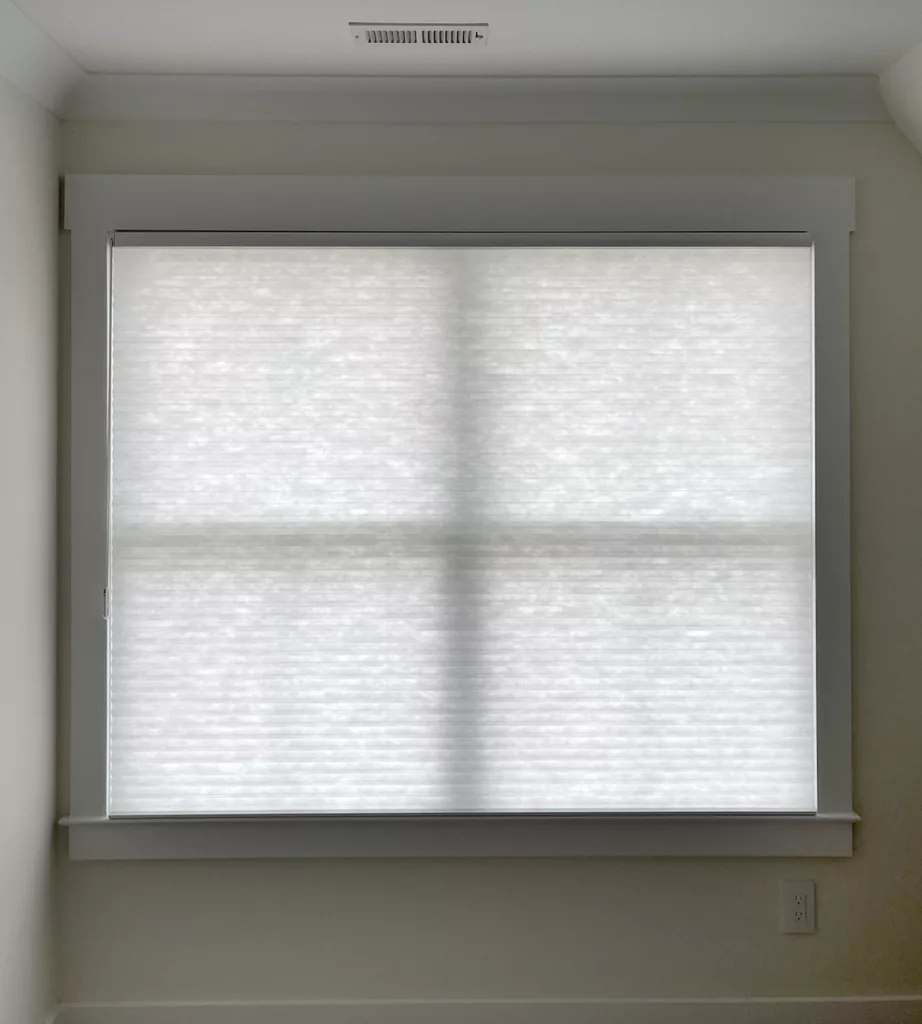
Light Filtering
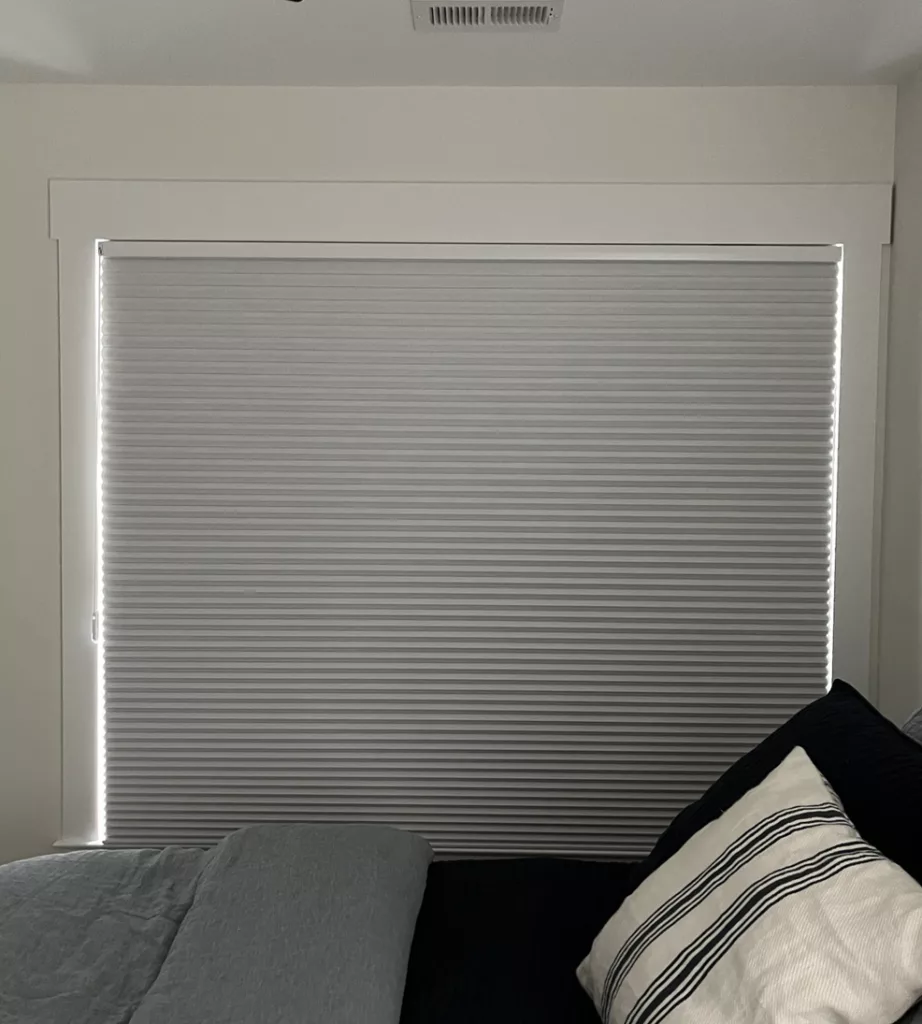
Room Darkening
Why Do Cellular Shades Have Light Gaps?
Custom cellular shades are carefully measured to fit the window, but an inside-mounted shade still needs enough clearance to move freely within the opening. Windows themselves may also be slightly out of square.
As a result, narrow gaps can remain between the shade and window frame. With light-filtering fabrics these gaps may be barely noticeable, but they become more apparent when you’re trying to create a very dark room. Fortunately, there are several ways to minimize them.
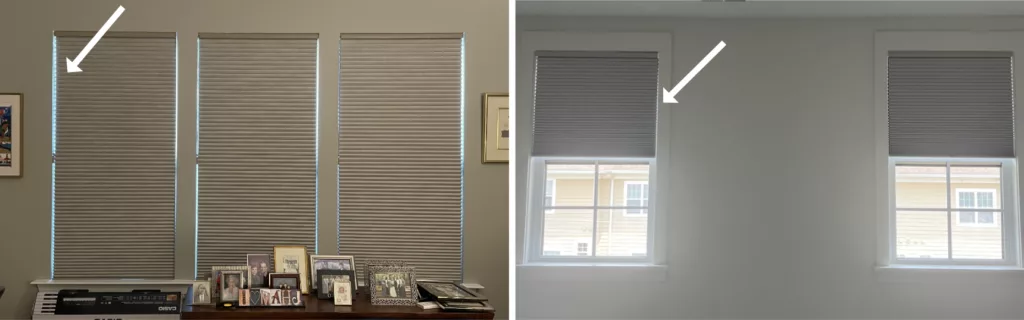
How to Minimize Light Gaps with Cellular Shades
LightLock® Side Channels
For select Hunter Douglas Duette® Honeycomb Shades, LightLock® uses unique side channels designed to reduce the light that enters along the edges of the shade. It’s an option worth considering for bedrooms and other spaces where enhanced room darkening is a priority.
Layer Cellular Shades with Drapery
Custom drapery can extend beyond the sides of the window and help cover perimeter light gaps while adding softness, color and dimension to the room. Layering also gives you greater flexibility: cellular shades can handle everyday light and privacy control while drapery provides another layer when greater darkness is desired.
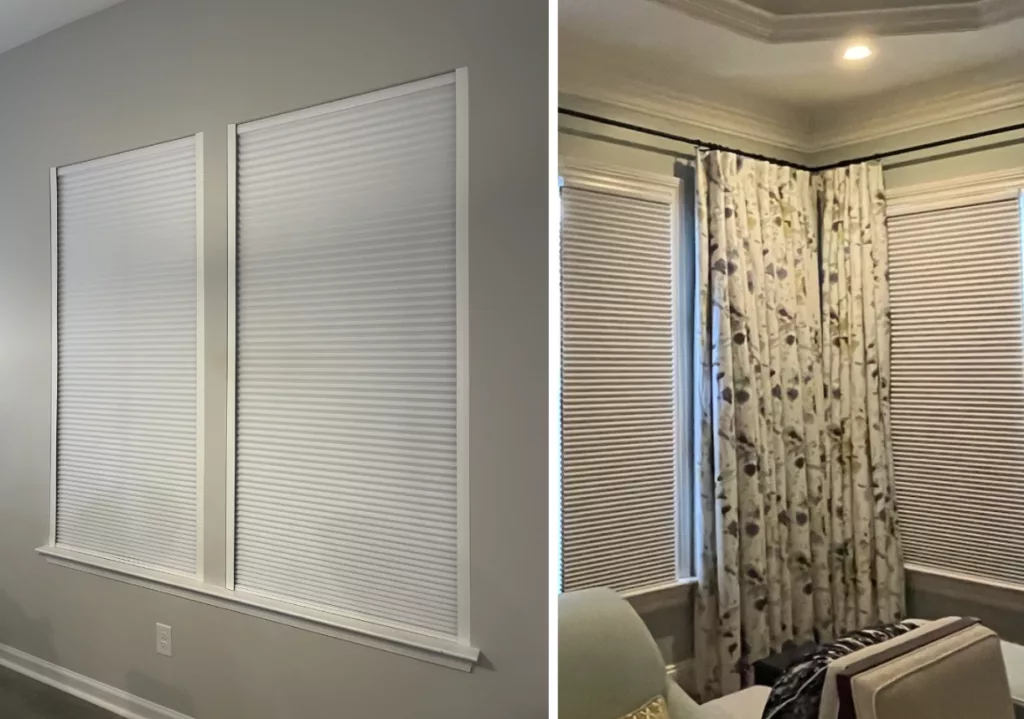
LightLock Blockout Channels or Drapery Panels can help minimize light gap on cellular shades
Consider One Large Shade Across Multiple Windows
A wide window made up of several individual panes presents another decision: Should each section have its own shade, or should one shade span the entire opening?
Where product specifications and window dimensions allow, one larger cellular shade can eliminate the gaps that would otherwise occur between multiple individual shades. The result can be a cleaner, more continuous appearance with fewer places for light to enter.
Individual shades may still be preferable when you want independent light control across different sections of the window, so the best configuration depends on how you use the space.
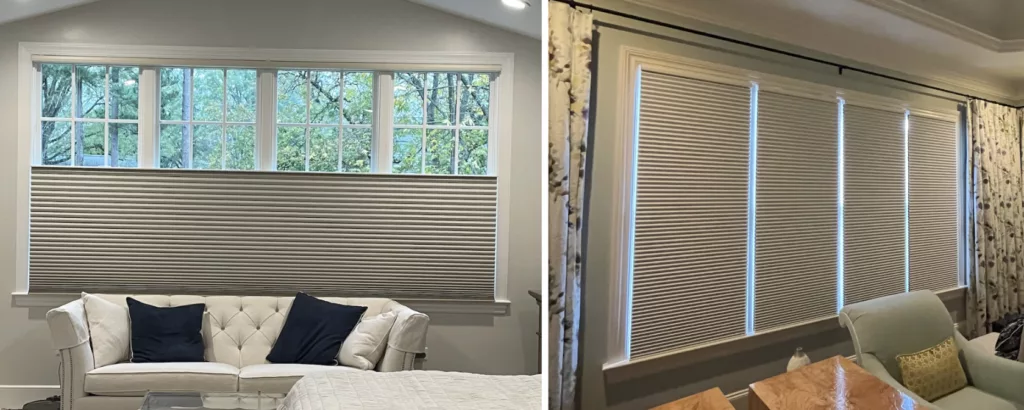
One Cellular Shade vs Multiple Shades
For a multi-pane window, there’s no single configuration that’s right for every home.
One larger shade may be preferable when you want:
- Fewer gaps between shades
- A continuous, streamlined appearance
- All sections of the window covered or uncovered together
Multiple cellular shades may work better when you want:
- Independent light control
- Easier access to individual sections of the window
- A configuration better suited to the size or structure of the opening
Window dimensions, hardware limitations and mounting conditions can also determine which configuration is possible. Professional measuring helps identify the best approach before your shades are ordered.
Inside Mount vs Outside Mount Cellular Shades
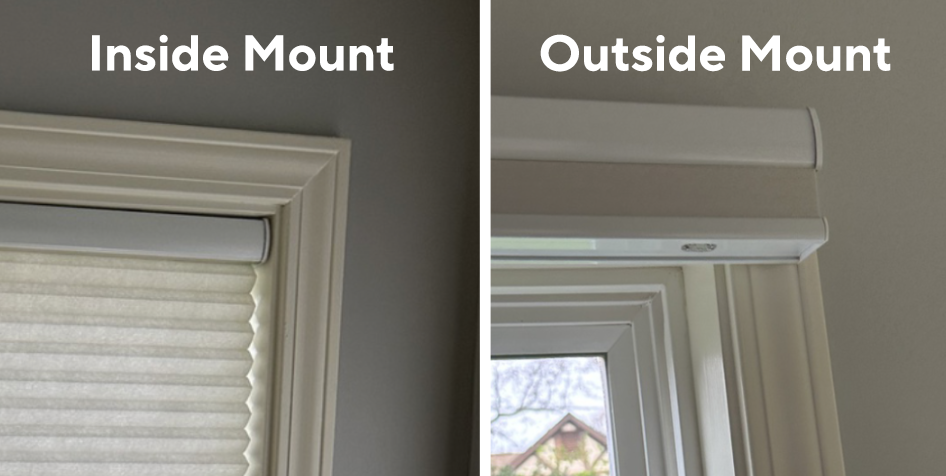
Cellular shades are particularly well suited to inside mounting because their streamlined construction can work with relatively shallow window openings. An inside mount places the shade within the window frame for a clean, built-in appearance.
The available mounting depth ultimately determines whether a shade can be fully recessed. With very shallow or zero-depth windows, an inside-mounted shade may extend beyond the trim even when an inside mount is possible.
An outside mount installs the shade beyond the window opening. This can be useful when there isn’t enough mounting depth inside the frame or when greater coverage around the window is desired.
Inside or Outside Mount for Room Darkening?
Mounting style becomes particularly important when room darkening is the goal.
An inside mount can provide a streamlined fit, but some perimeter light is normally expected unless the shade uses a system specifically designed to address side gaps.
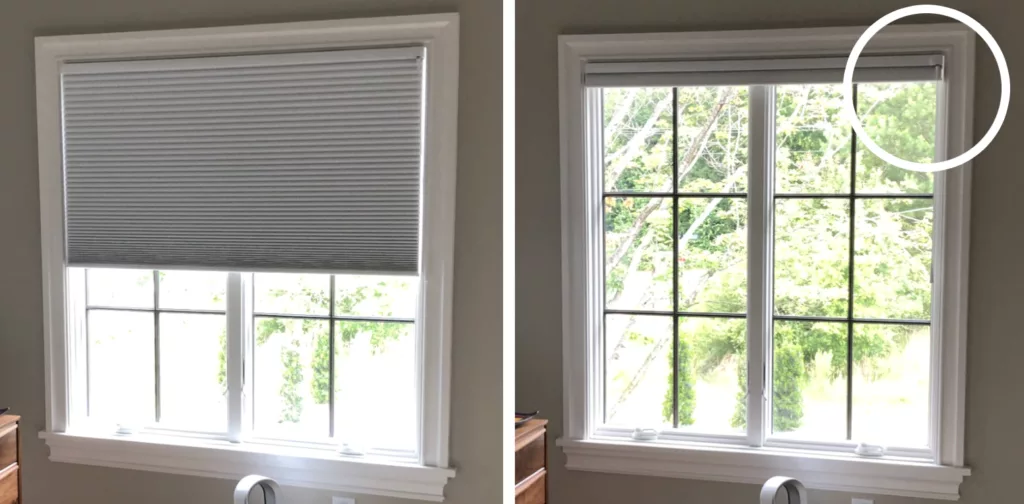
With certain room-darkening cellular fabrics, an outside mount can also create a visible halo effect. Incoming light may reach the light-colored backing of the fabric around the window opening and reflect onto the surrounding wall.
The best solution depends on the individual window. Window depth, trim, dimensions, fabric and desired level of darkness should all be considered before deciding between an inside and outside mount.
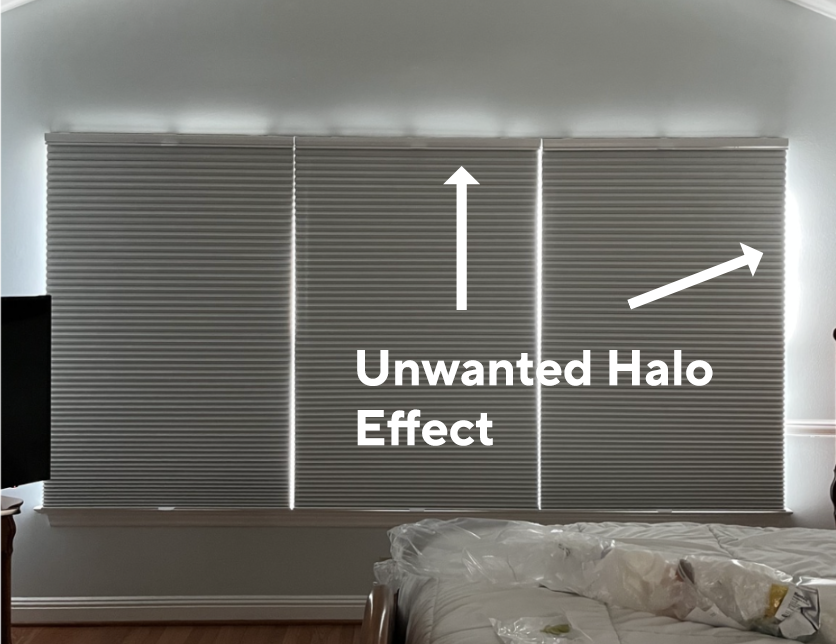
Outside mounted cellular shades with room darkening fabric may create an unwanted halo effect during the day.
Do Cellular Shades Help Protect Interiors from Sunlight?
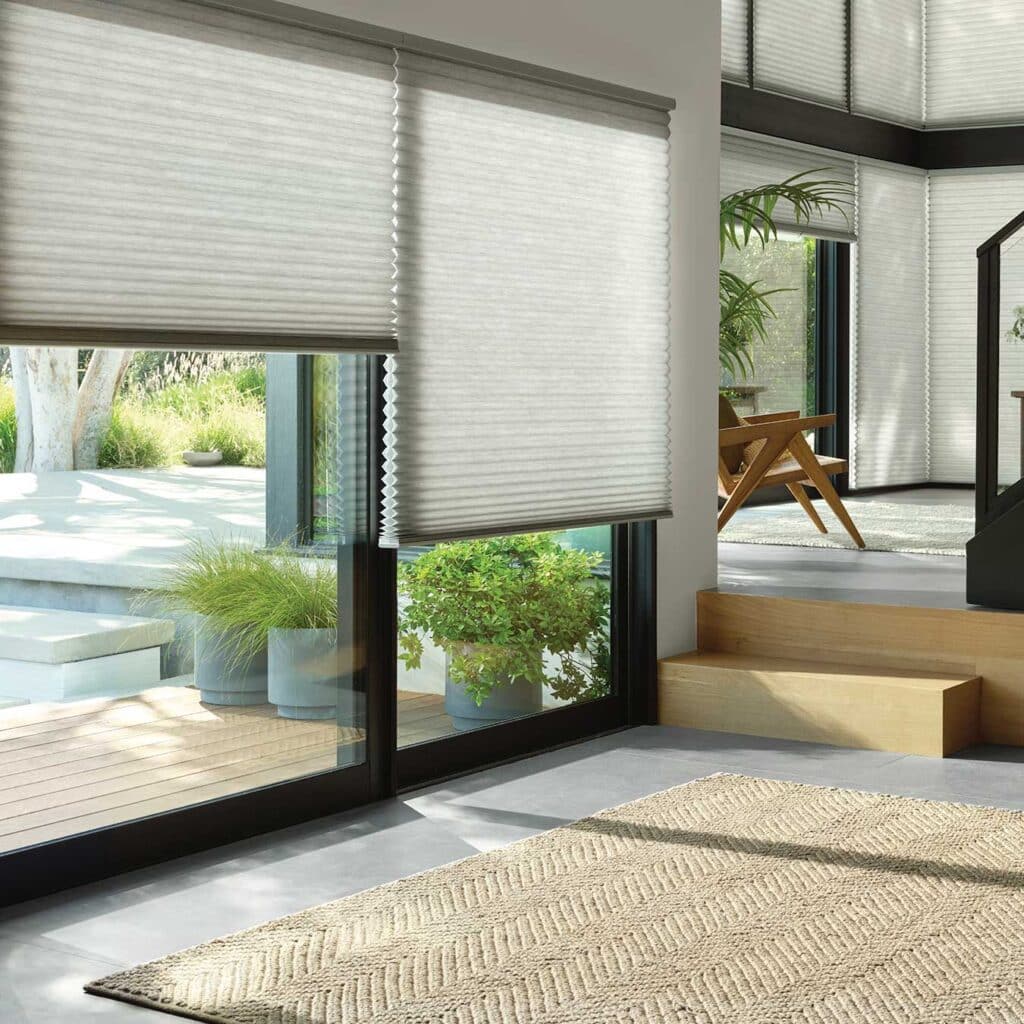
Cellular shades give you another layer of control over the sunlight reaching furnishings, flooring and artwork. Keeping shades lowered during periods of intense sun can help reduce exposure to damaging UV rays, while light-filtering fabrics allow you to continue enjoying softer natural light.
The amount of light and UV protection varies by fabric and opacity, so consider the direction your windows face and the amount of direct sunlight the room receives when choosing your fabric.
Are Cellular Shades Right for Your Windows?
Cellular shades are particularly versatile because you can customize their fabric, opacity, mounting style and operating system around the needs of the window and room. They’re an excellent option when energy efficiency is a priority, but details such as light gaps, mounting depth and shade configuration can make a meaningful difference in the finished result.
For standard windows, specialty shapes, skylights, large expanses of glass and sliding doors, our design team can help determine which cellular configuration provides the right balance of light control, privacy, insulation and style.
Explore our Hunter Douglas honeycomb and cellular shades, including Duette® and Applause®, or contact A Shade Above to find the right solution for your windows.