Sliding glass doors are one of the most requested—and most misunderstood—openings we work with. They’re large, heavily used, and architecturally unforgiving. The wrong window treatment doesn’t just look off; it interferes with daily life.
As a local, design-build window treatment company, we see the same issues over and over: products that don’t clear handles, shades that bind or drift, panels that stack awkwardly, or systems that simply aren’t built for repeated use. This guide breaks down the best window treatments for sliding glass doors, explaining what actually works, why it works, and where each option falls short.
If you’re a homeowner, designer, or builder evaluating window coverings for sliding glass doors, patio doors, or oversized openings, this is a real-world breakdown based on installation experience across the Carolinas. Choosing the right sliding glass door window treatments is essential for both function and design.
Why Sliding Glass Doors Need Specialized Window Treatments
Sliding doors aren’t just wide windows turned sideways. They create unique mechanical and design constraints when installing window coverings for sliding glass doors:
- Frequent traffic requires smooth, durable operation
- Door handles, locks, and sensors limit mounting depth
- Wide spans create heavy stack-back and alignment challenges
- Limited depth often rules out inside-mount solutions
- Improper anchoring leads to sagging, dragging, or failure
Any successful window covering solution must prioritize clearance, durability, alignment, and daily usability—not just aesthetics.
Side-by-Side: Proven Solutions for Sliding Glass Doors
Below are the products we install most often, ordered from architectural to soft treatments:
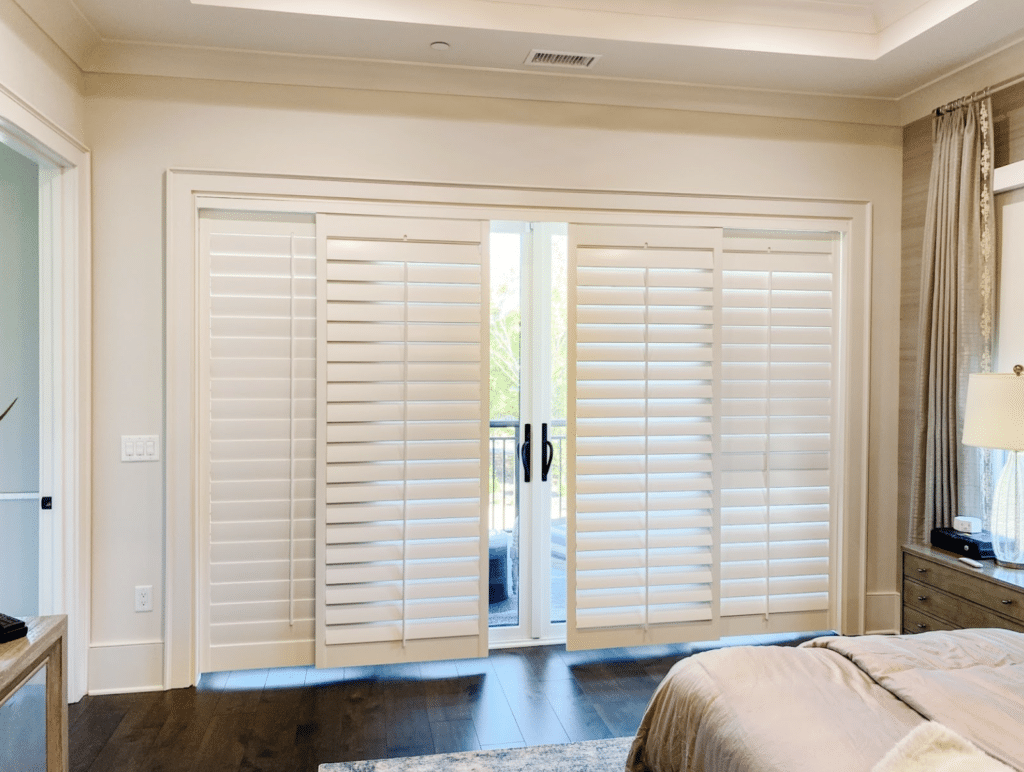
Bypass Track Shutters
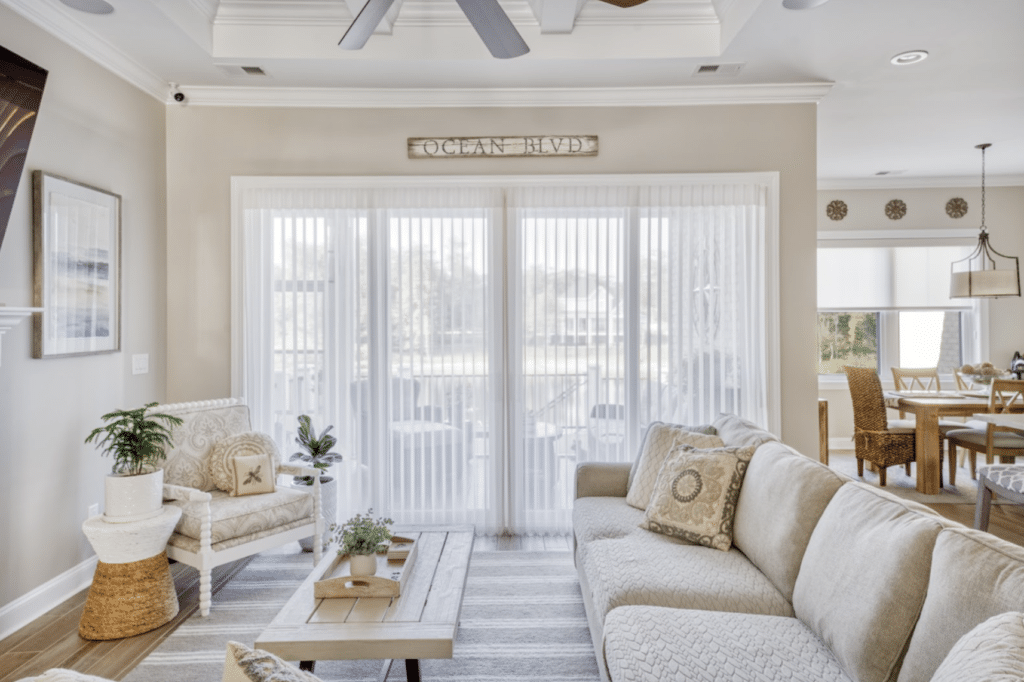
Luminette® Privacy Sheers
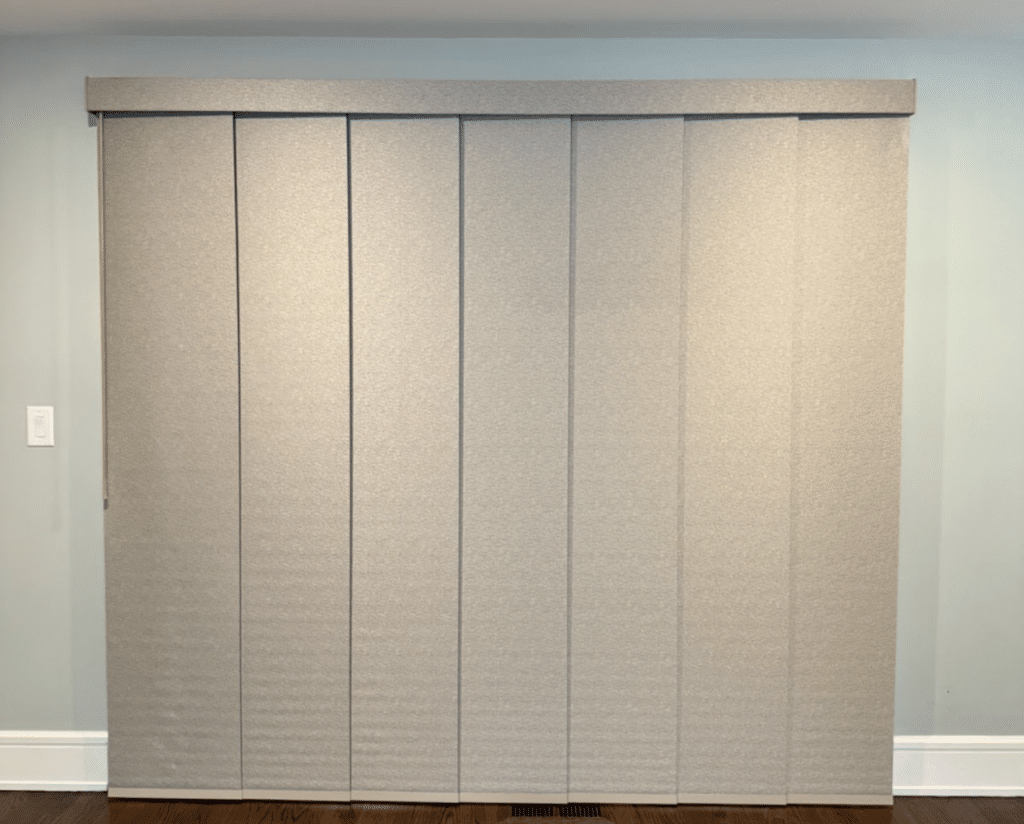
Skyline® Panel Track Blinds
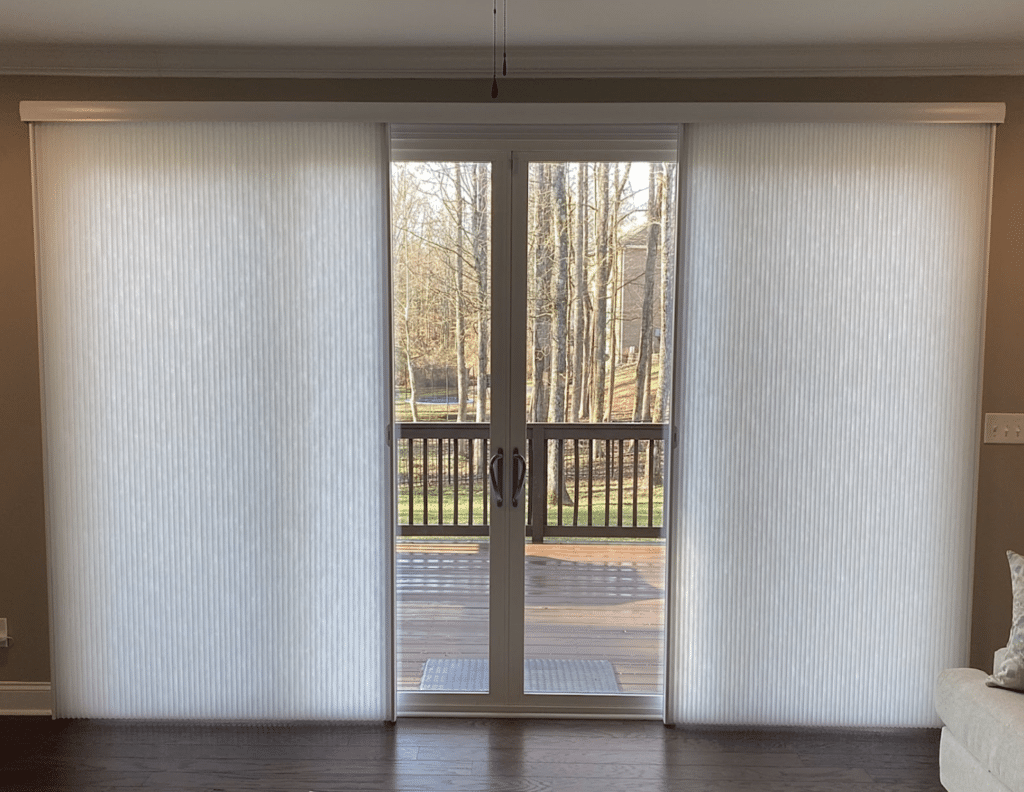
Duette® Vertiglide® Honeycomb Shades
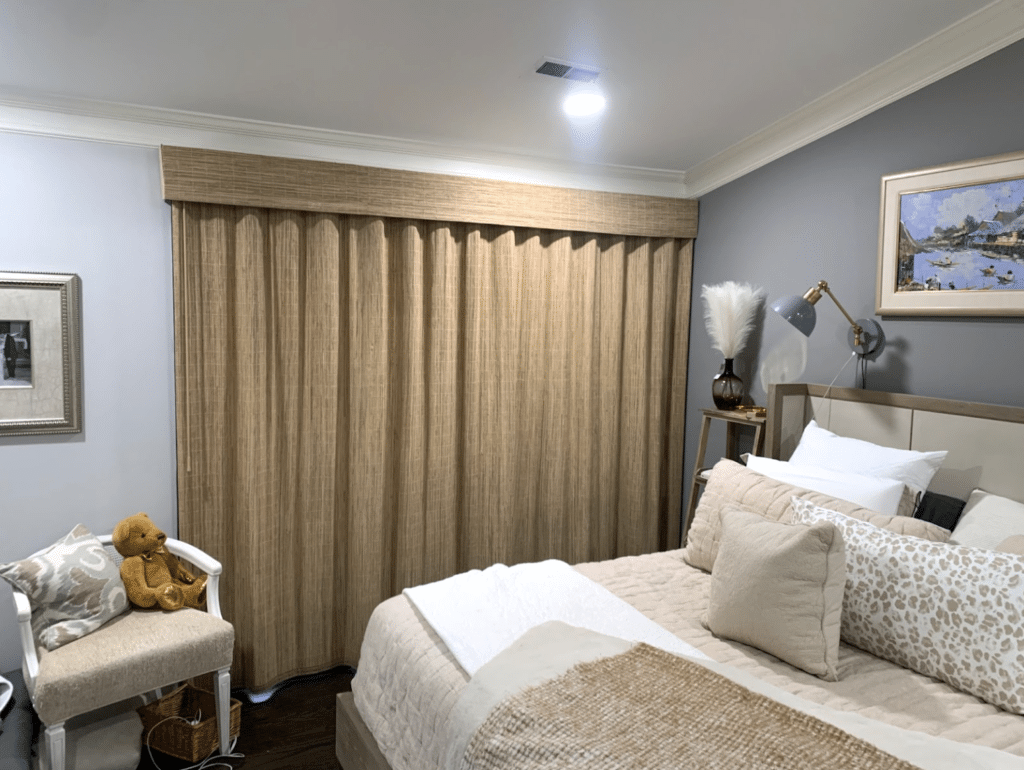
Provenance® Woven Wood Drapery
Pros & Cons: What Actually Holds Up
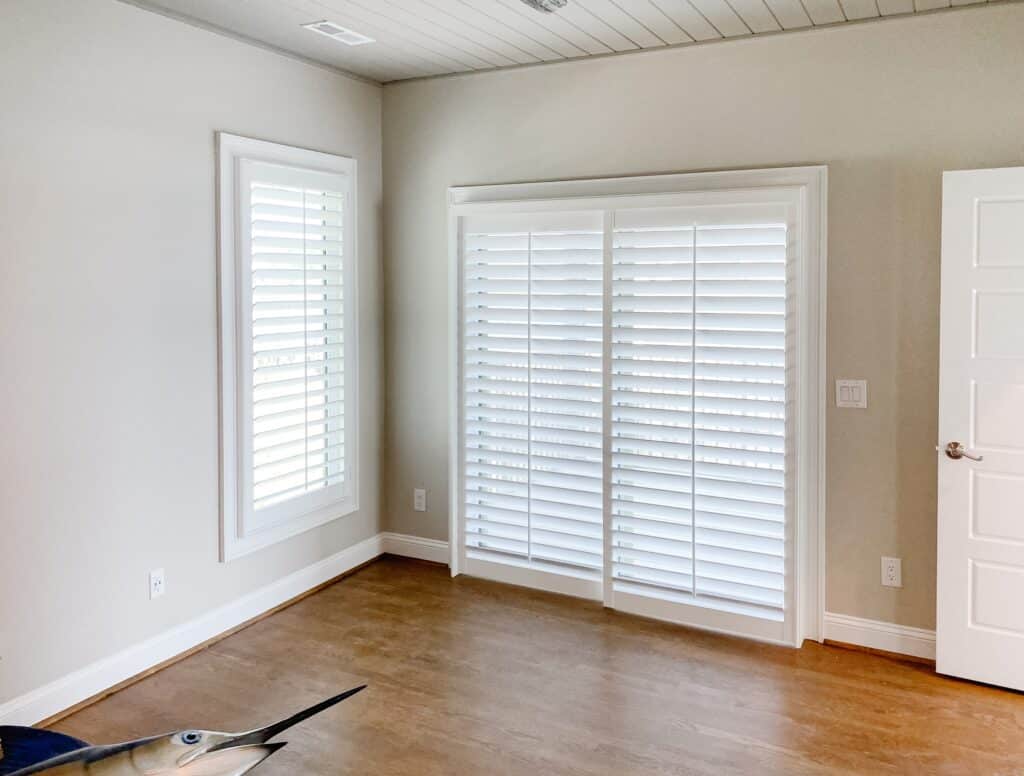
Artisan Shutter – By-Pass Track
Artisan by-pass shutters are a solid, architectural solution for sliding glass doors. The panels glide past one another on a track, so there’s no swing clearance needed, which makes them practical for everyday use. When considering shutters as your patio door window treatments, it’s important to note that they offer excellent light control and privacy. Because they’re built from hardwood, shutters are also extremely durable. Visually, they make a strong design statement and are best suited for homeowners who want a permanent, built-in look rather than a soft fabric treatment.
Duette® Vertiglide® Honeycomb Shades
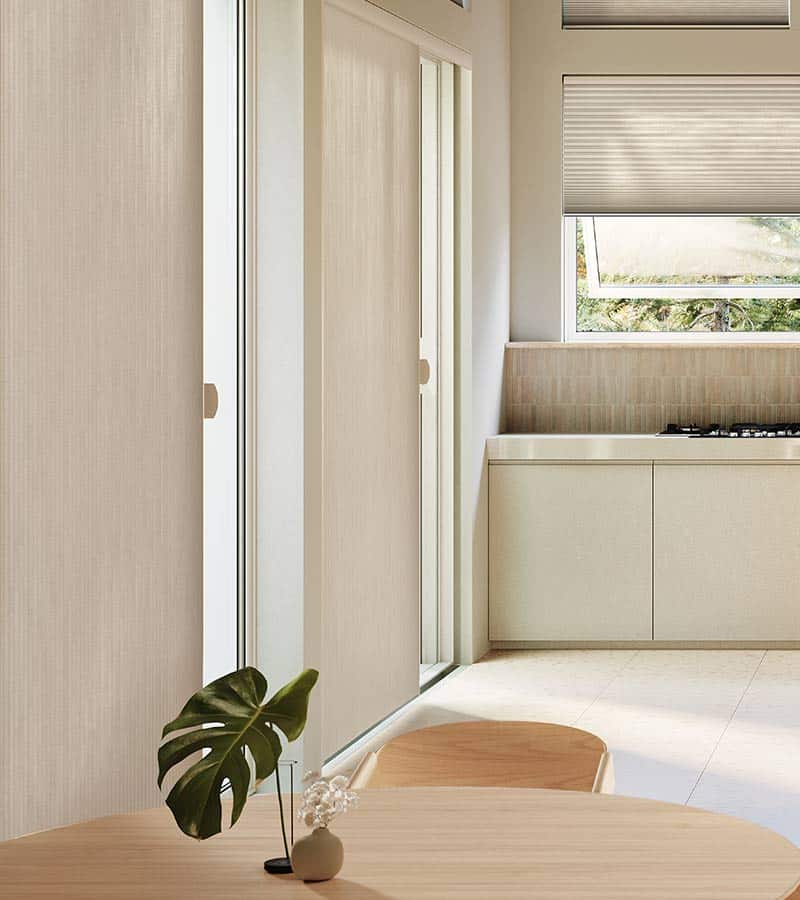
Duette Vertiglide vertical cellular shades are designed specifically as shades for sliding glass doors, using a side-to-side honeycomb system instead of traditional vertical vanes. They’re a great choice if insulation is a priority, especially on large expanses of glass, and they stack neatly to one side when open. On wider doors, manual operation can feel a bit heavy, and when fully closed, they don’t offer much view through the fabric.
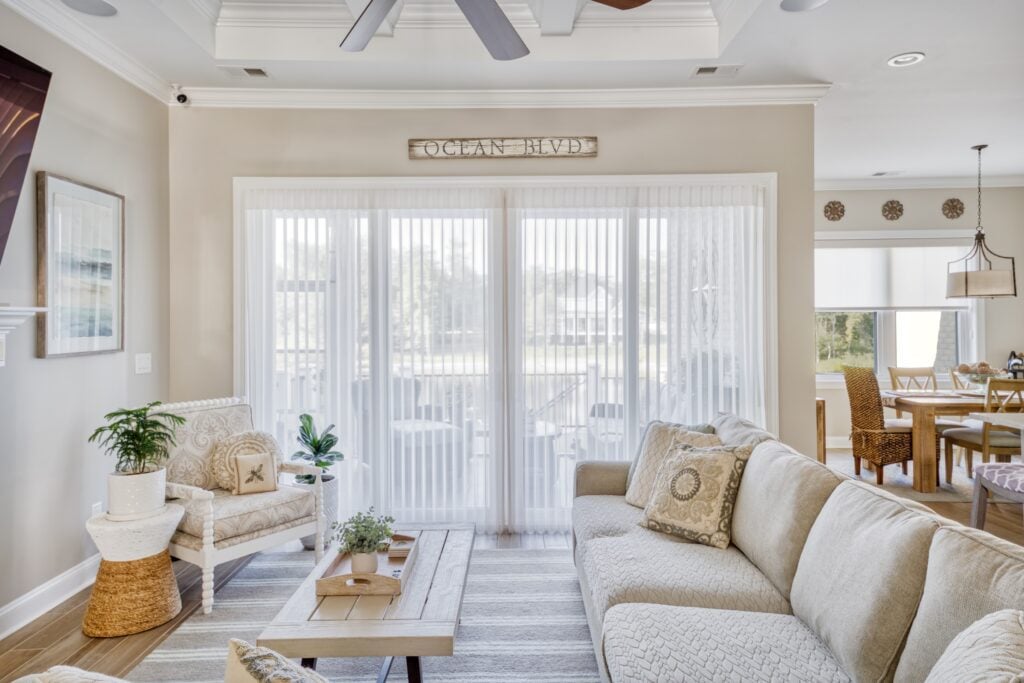
Luminette® Privacy Sheers
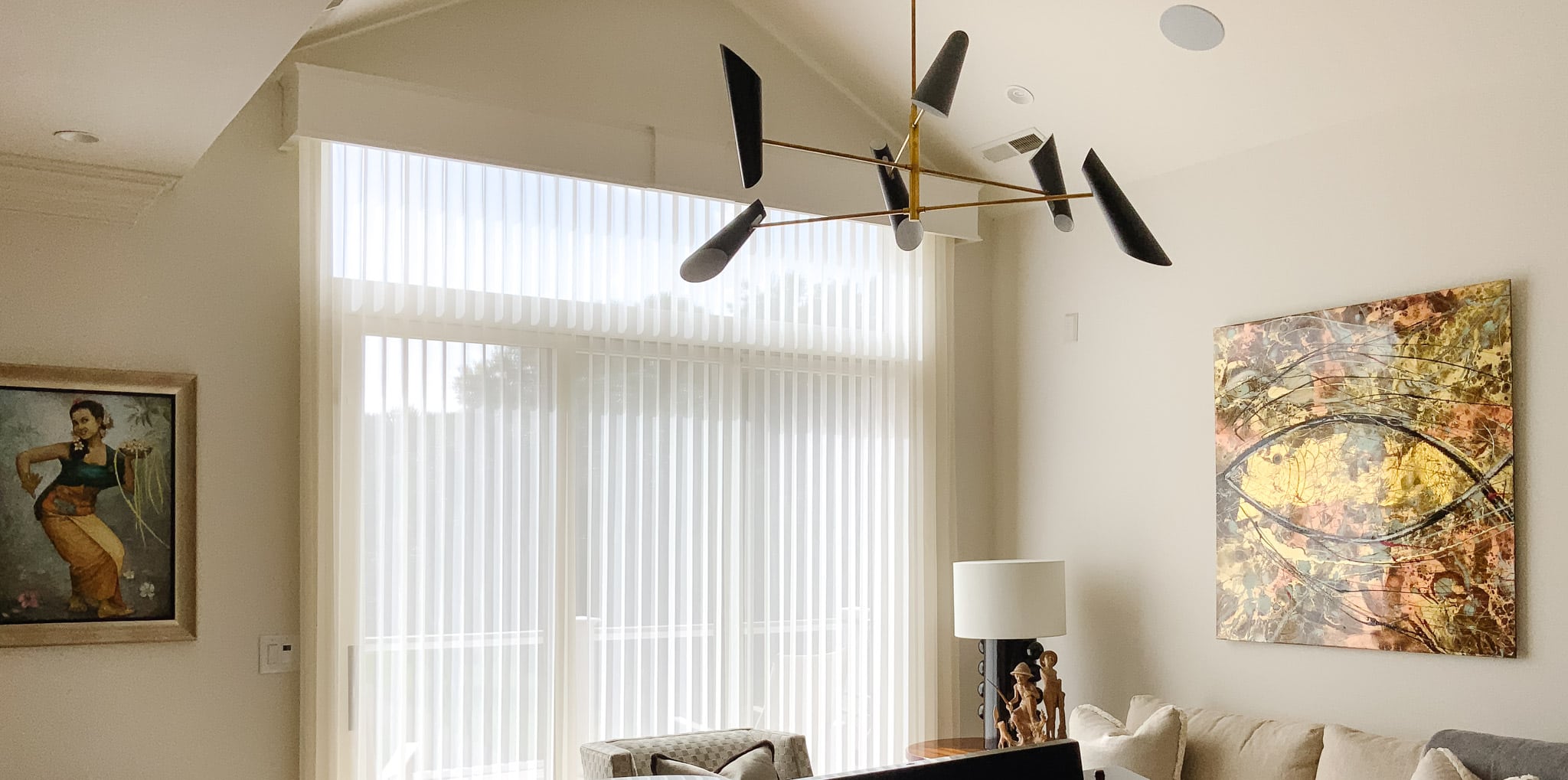
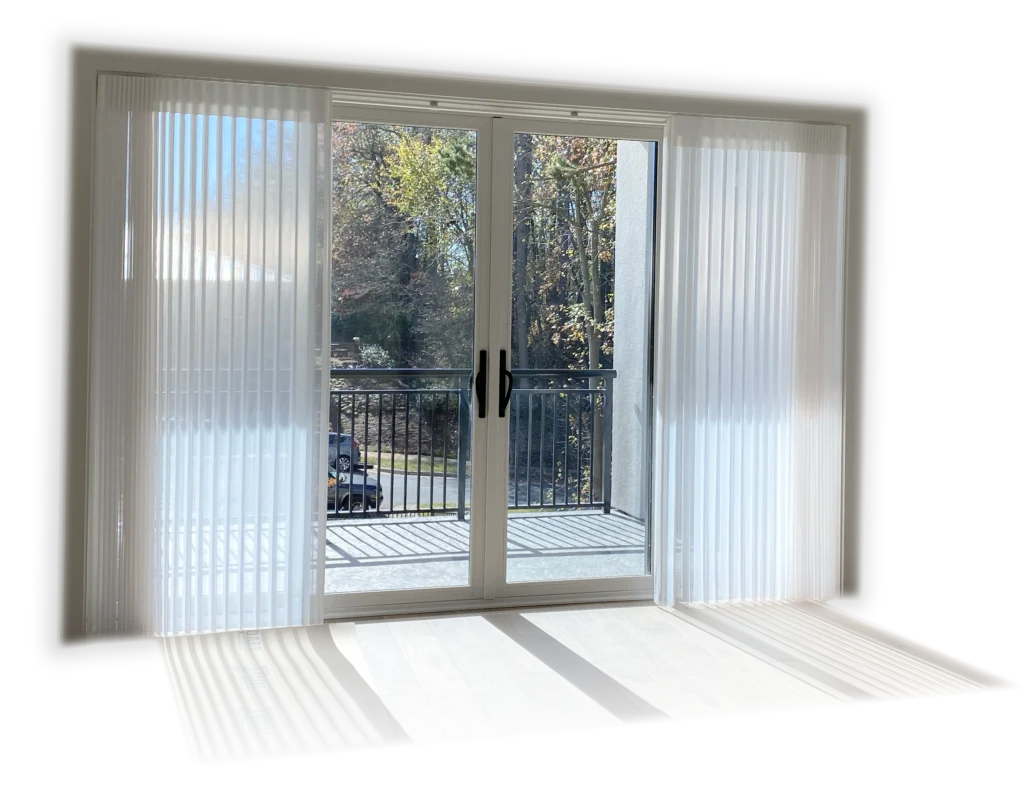
Luminettes are made for wide openings and sliding doors where you want light without feeling exposed. Soft sheer vertical panels diffuse daylight, while the interior vanes rotate to give you privacy or a clear view outside. They’re visually lighter than shutters and feel more relaxed in living spaces. Insulation is minimal compared to cellular shades, and on very wide doors, manual controls can become cumbersome. Motorization adds cost, but dramatically improves everyday usability.
Provenance® Woven Wood Drapery
As a vertical alternative for sliding doors, Provenance Woven Woods bring warmth, texture, and a natural feel to your home’s doors. Similar to custom drapery, the panels stack softly to the side, allowing clear access when the door is in use, and they work especially well in casual or organic interiors. While they’re beautiful and inviting, they aren’t designed for full blackout or high insulation, making them better suited for spaces where atmosphere matters more than full light control.
Roller Shades
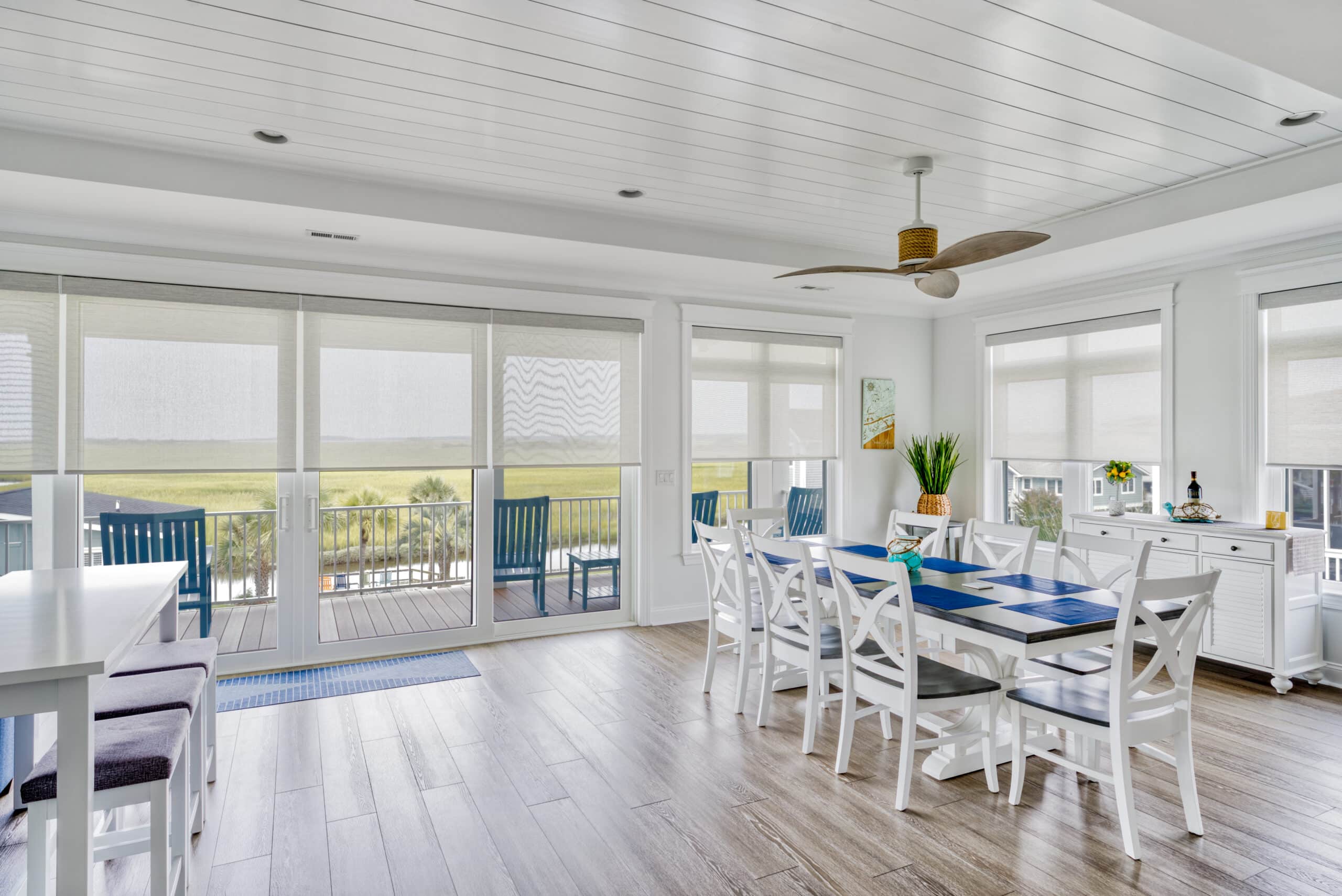
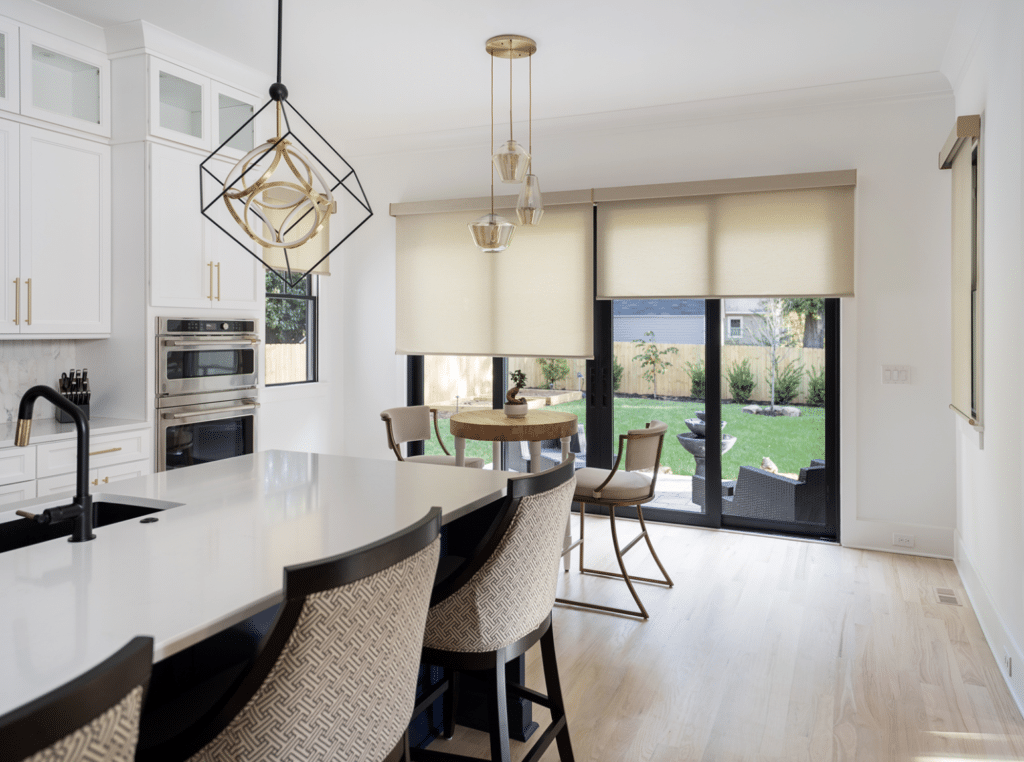
Roller shades offer a clean, modern look and are often chosen for minimal or contemporary homes. They keep visual clutter to a minimum and can span wide openings effectively, especially as motorized window treatments. However, roller shades typically allow light gaps at the sides and don’t provide much insulation. On large doors, manual operation can feel heavy, which is why motorization is often recommended if this style is selected.
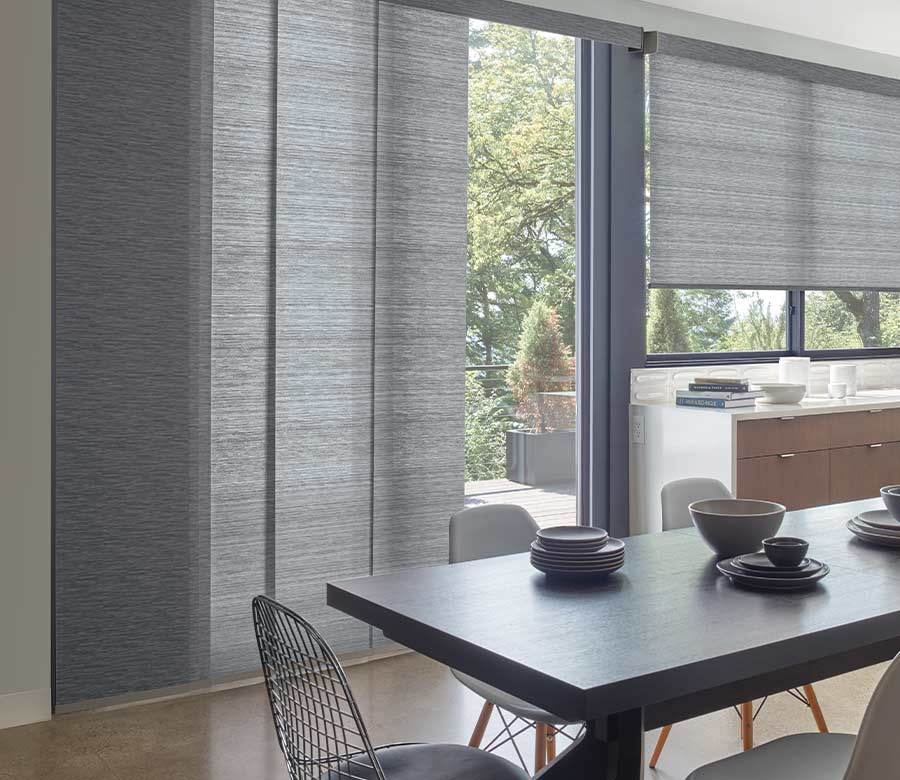
Skyline® Panel Track Blinds
Skyline panels are an architectural fabric panel system designed for very wide or multi-panel sliding doors. Individual panels glide smoothly along a track and stack to one side when open, creating a bold, modern appearance. While they function well for large openings, the stack does take up side space, and manual operation may not be ideal for doors that are used constantly throughout the day.
Somner® Vertical Blinds
Somner vertical blinds are a straightforward, budget-friendly option for sliding glass doors. They’re durable, easy to operate, and low maintenance, making them a practical choice for many homes. While they perform reliably, they have a simpler appearance and provide minimal insulation or sound control compared to higher-end systems.
Best Window Treatments for Sliding Glass Doors
To sum things up, the best window treatments for sliding glass doors depend on how the space is used. For high-traffic doors, gliding panels and Vertiglide shades offer smooth operation. For a more architectural look, bypass shutters provide durability and structure. If softness and light diffusion are the priority, Luminette privacy sheers or woven drapery panels are often preferred.
Common Obstructions & How We Solve Them
Door Handles / Locks: Outside mount or spacer blocks
Alarm Sensors: Coordinate placement before install
Floor Vents: Adjust vane length or redirect airflow
Low Headers / Crown: Extended brackets or fascia systems
Price Ranges by Tier (Before Tax)
| Tier | Product Examples | Estimated Range |
| Low | Basic Verticals, Entry-Level Rollers | $400 – $1,200 |
| Mid | Vertiglide, Woven Woods, Manual Panels | $1200 – $3,000 |
| High | Luminette, Shutters, Motorized Systems | $3,000 – $7,000+ |
How We Measure Sliding Glass Doors (From the Installer Who Actually Installs Them)
Sliding glass doors are one of the most nuanced openings in a home. How they’re measured directly affects how they look, how they operate, and how they hold up over time.
That’s why our approach is informed not just by design—but by decades of hands-on installation experience.
Alan Thomas, our Senior Installer, has installed thousands of sliding door treatments across the Carolinas. His job isn’t just to hang what’s ordered—it’s to make sure what’s designed actually works in real life.
Here’s how that expertise shows up in the measuring process.
Designing First, Measuring Second
Before a tape measure ever comes out, the first question is simple: What is the intended design outcome?
Are we trying to:
- Minimize visible stack-back when the door is open?
- Hide hardware and returns cleanly into the wall?
- Keep fabric off the floor without sacrificing coverage?
- Balance privacy with daily usability?
The answers to those questions determine how the door is measured—not the other way around.
Luminette® Privacy Sheers: Hiding the Stack, Preserving the Look
With Luminette systems, most clients want the same thing: When the door is open, they don’t want to see a bulky stack of fabric.
To accomplish that:
- We often design the system above the door casing
- Width is extended beyond the opening to conceal the stack as much as possible
- Height is measured intentionally, knowing that during installation the system is set ½”–¾” off the floor to prevent dragging
This small adjustment is invisible once installed—but it dramatically improves long-term performance.
Vertiglide® Honeycomb Shades: Precision Matters
Vertical cellular shades behave differently than fabric vanes.
For these systems:
- We typically measure trim to trim for width
- Height is measured from the floor to the top of the trim plus approximately ½”
- Once installed, this naturally lifts the fabric ½”–¾” off the floor, preventing wear
Because Duette Vertiglide has a smaller stack-back, they can work beautifully inside or outside the opening—but only when measured with that precision in mind.
Cornices & Valances: Where Most Systems Go Wrong
Cornices over sliding doors should always:
- Extend beyond the trim
- Return cleanly into the wall, not stop short
- For Artisan systems, returns are engineered into the system itself.
- For other manufacturers, return depth must be calculated manually—and it has to be right.
When done properly, the result is a clean, built-in look that hides hardware and feels intentional—not like an add-on.
Roller Shades on Sliding Doors: The Honest Truth
Roller shades are one of the most misunderstood products for sliding glass doors.
From an installer’s perspective:
- Inside mount is always preferred for privacy and performance
- Outside mount roller shades often introduce large side gaps
- Mounting on trim increases the distance between fabric and wall—reducing privacy
There are times when rollers make sense, but they should never be the default. When used, they require careful planning, realistic expectations, and the right conditions. This is why we often guide clients toward better-suited products for residential sliding doors—especially in bedrooms and primary living spaces.
Why This Level of Detail Matters
At the end of the day, measuring a sliding glass door isn’t just about dimensions. It’s about interpreting the design intent and translating it into a working system. That’s where experience matters. Our sales team designs with installation in mind, and our installers measure with design intent in mind.
That collaboration is what produces:
- Clean lines
- Proper clearances
- Smooth daily operation
- Long-term durability
It’s also why our finished projects look the way they do—intentional, functional, and refined.