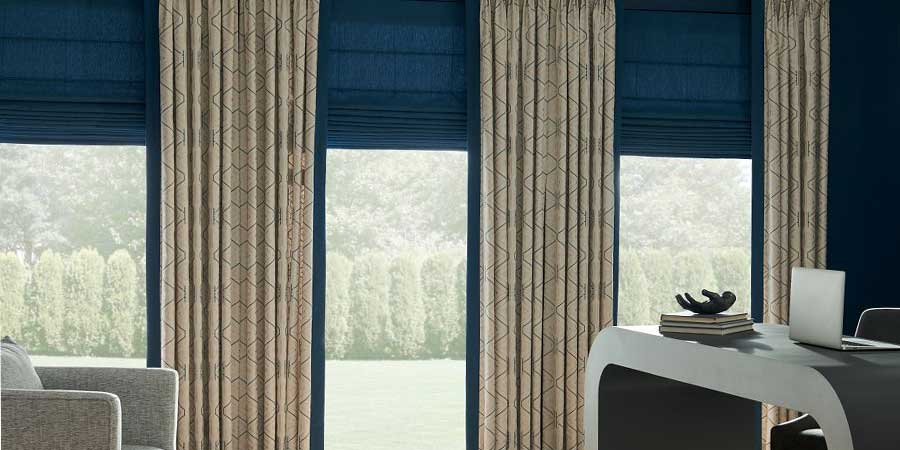
In North and South Carolina, the windows of our homes do a lot of work. They invite in a beautiful amount of natural light, frame the outdoor views of your landscape, and often connect interior living spaces to porches, patios, and gardens—which we all love! Layering drapery with shades is one of the most effective ways to manage all of the incoming light. And, the overall look adds softness, comfort, and a tailored finish to the windows.
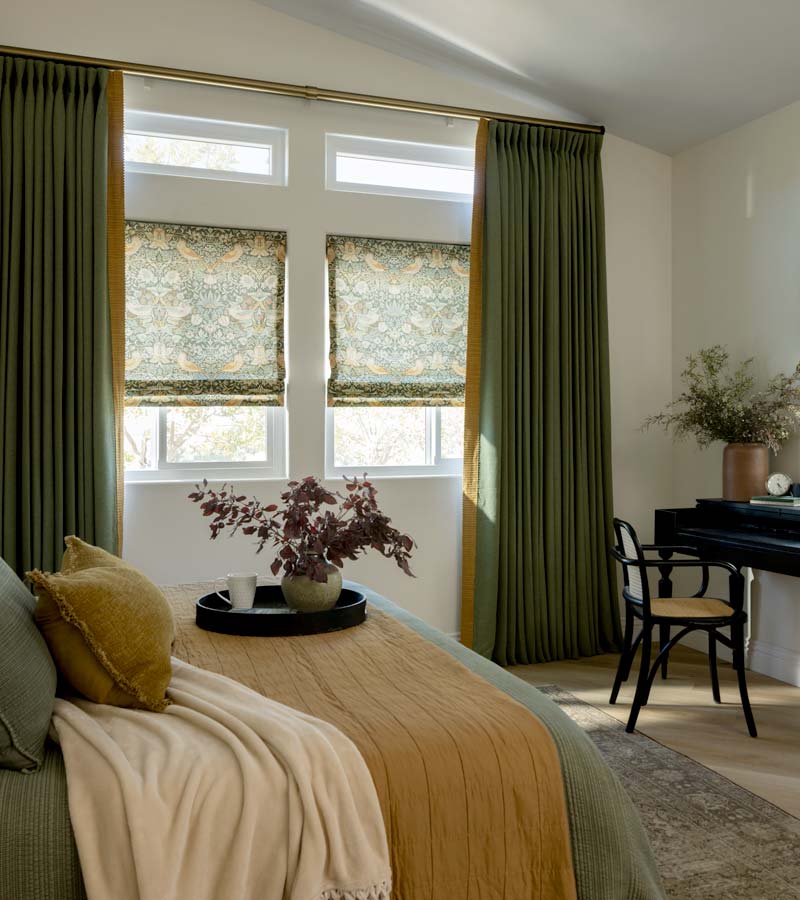
Custom Roman Shade
Layering window treatments means you can combine beauty and performance. Shades handle the privacy, glare, and heat control of the home, while drapery adds texture, movement, and all-around gorgeous design. Together, they create a polished look that feels both livable and refined—an ideal balance needed in Carolina homes.
What Does “Layering Window Treatments” Mean?
Layering window treatments simply means combining two types of coverings on the same window. Typically, this starts with a window shade, commonly called the “base” window covering. Its job is to handle the light control, privacy and energy efficiency of the window. Custom drapery is installed as a decorative outer layer, while also offering benefits of control when closed. While we say “shades and drapery,” layering can be a combination of drapery with shades, blinds or shutters. The goal is to create the “Dynamic Duo” of a controlled atmosphere and beautiful design.
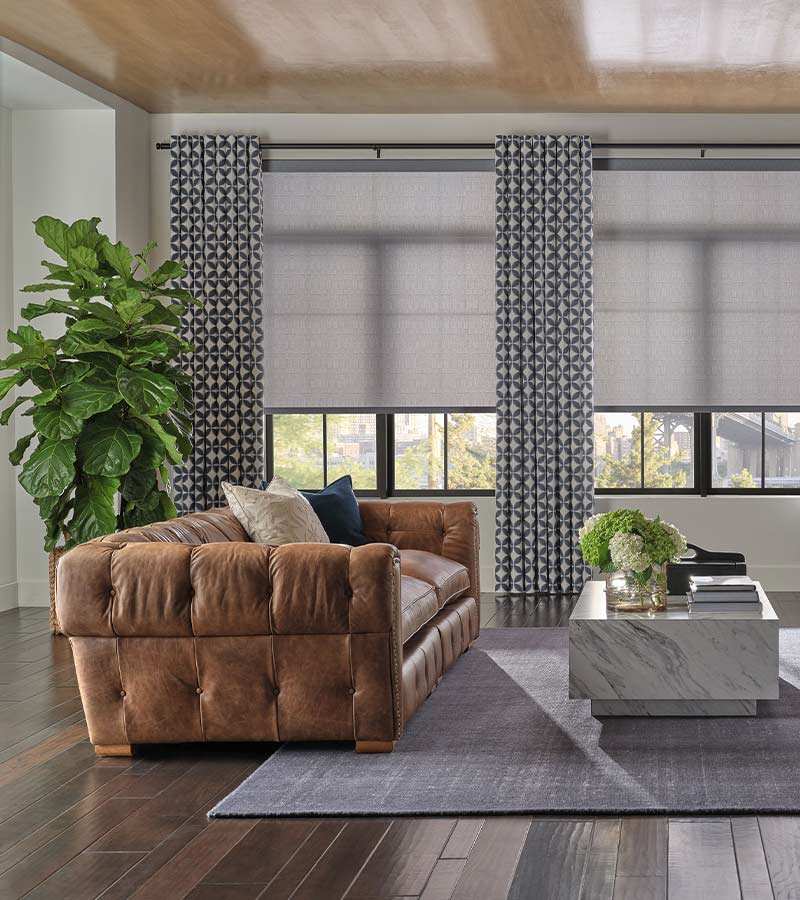
Designer Roller Shades
A Closer Look at Layering
Let’s look closely at a home office that faces South. This room features three windows that bring in an abundance of natural light—ideal for productivity, but terrible for glare and heat.
The Base Layer
This family needed an energy efficient shade on the windows that would allow light to filter in without the glare and heat. Sonnette® Cellular Roller Shades in a light-filtering fabric created the insulating layer, blending beautifully with the wall color. As you can tell, these insulating shades fit the windows perfectly, allowing a portion of light and views. But something was missing…
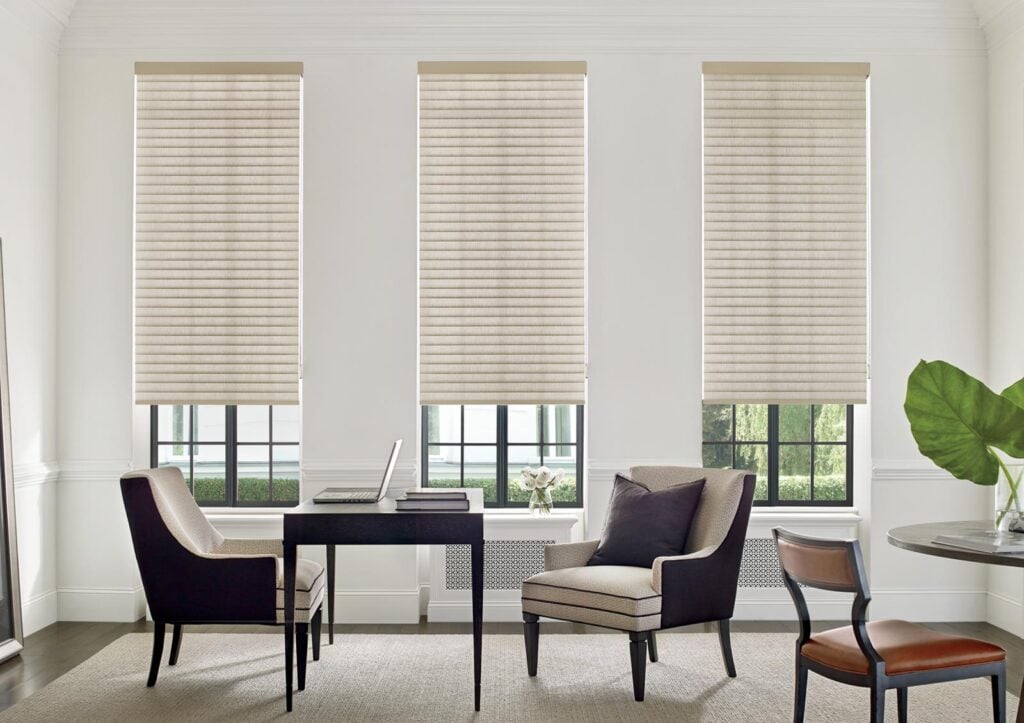
Sonnette® Cellular Roller Shades
The Drapery Layer
Adding drapery to this wall of windows was a “Ta-Da!” moment. This room is a great example of how drapery panels frame the windows, adding dimension and softness with fabric. The header of the draperies is done as a pinch pleat style, which offers a custom, tailored finish. The contrasting color pairs well with the neutral shades. It’s bold—without being over the top.
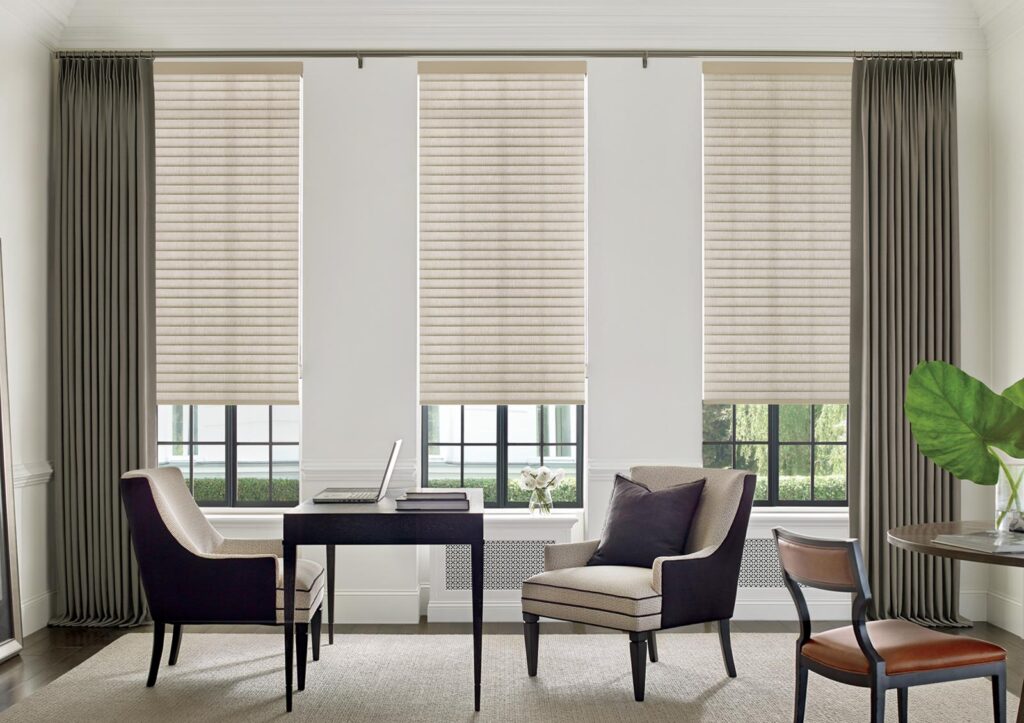
Sonnette® Cellular Roller Shades with Side Draperies
The Layering Approach
Layering drapery with a base window covering is an approach that works especially well when you need versatility and flexibility at the window. This can include:
- Changing control over the course of the day as light changes
- Windows face strong southern or western sun
- Rooms that need both daytime softness and nighttime privacy
- Open floor plans that call for visual balance across large expanses of glass
Layered treatments can be mounted using double rods, discreet track systems, or integrated motorized solutions, depending on the look and functionality you’re after.
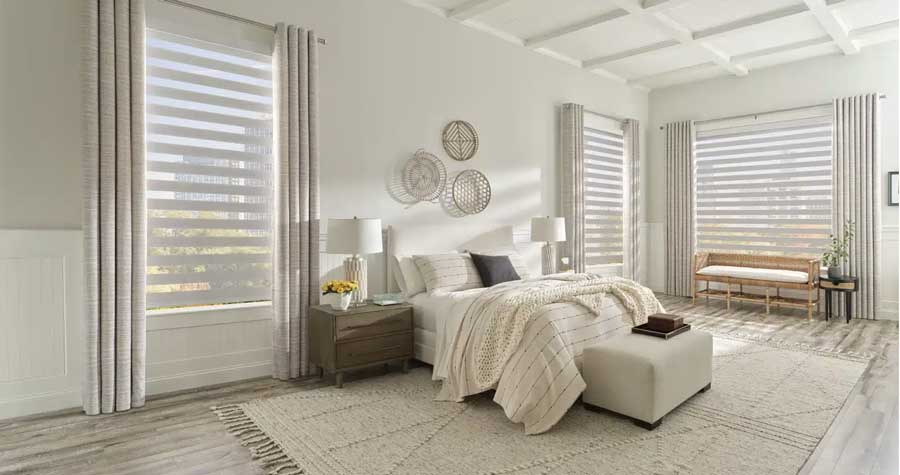
Designer Banded Shades with Custom Drapery
Shade + Drapery Combinations That Work Beautifully
Layering isn’t a one-size-fits-all solution. It’s more about finding the combo that appeals to your eye—and finishes the look in your home! The best pairings depend on your home’s overall design, how you use the space, and the mood you want to create.
Roller Shades + Neutral Drapery Panels
This pairing is a favorite in modern and coastal Carolina homes. Roller shades provide a clean, fresh appearance with light control and UV protection, while the drapery easily frames the windows. It’s a great look for living rooms, dining spaces, and rooms with large windows.
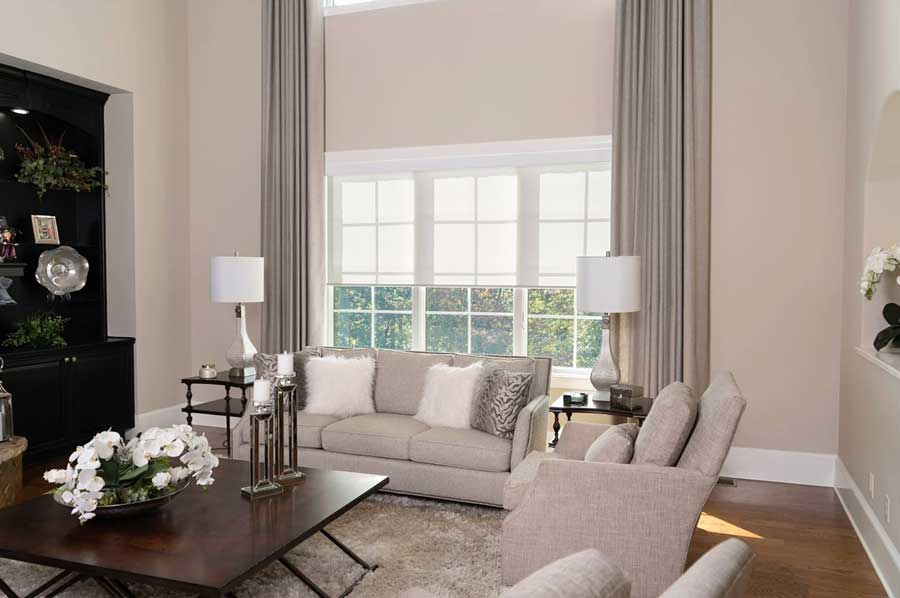
Designer Roller Shades with Custom Drapery
Roman Shades + Drapery Panels
Roman shades bring structure and visual interest, while drapery panels add height and dimension. This combination feels classic without being formal and works well in family rooms, home offices, and primary living areas.
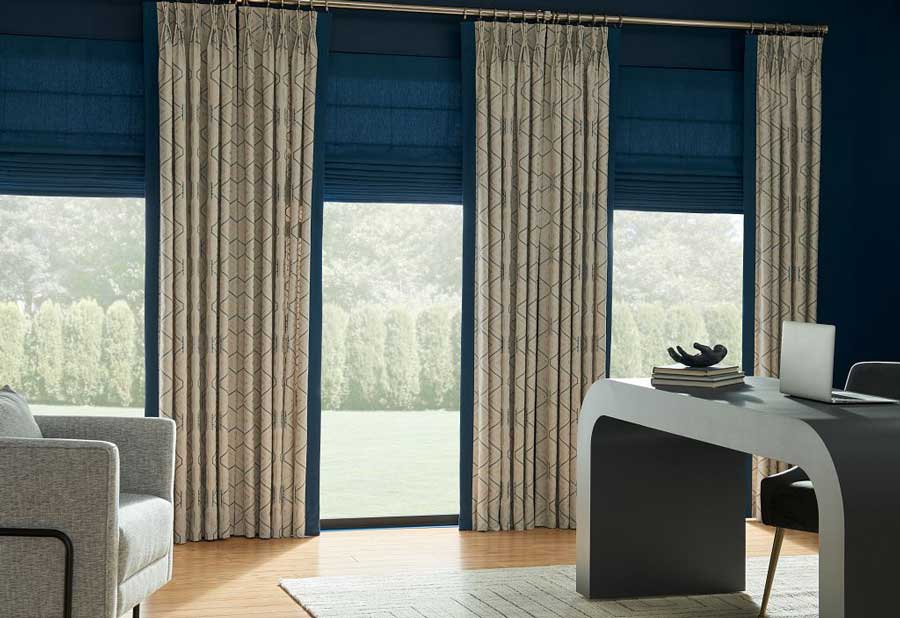
Pinch Pleat Drapery with Soft Roman Shades
Woven Shades + Luxe Drapery
Natural woven shades paired with luxury fabrics combine for a dynamic look—organic texture meets high-end design. This combination is especially popular in modern homes that showcase exquisite finishes and popular design statements.
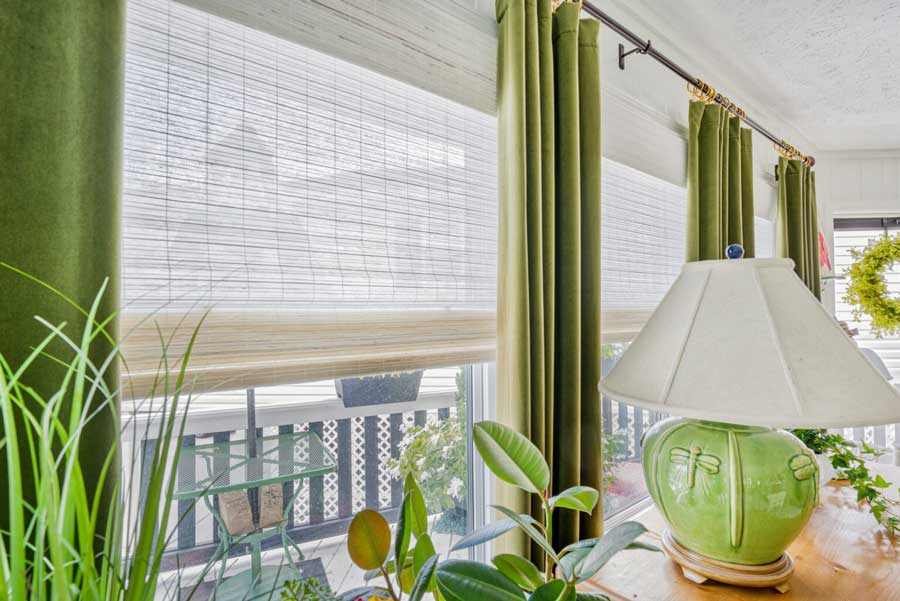
Provenance® Woven Wood Shades with Custom Drapery Panels
Honeycomb Shades + Room-Darkening Drapery
For bedrooms and media rooms, this layered solution delivers comfort and performance. Honeycomb shades improve insulation and energy efficiency, while drapery can cover light gaps, enhancing darkness and adding a cozy, finished feel.
The Balance of Privacy & Light Control
Carolina homes are often light-filled interiors, but they still need privacy—especially in neighborhoods with close sight-lines or large street-facing windows. Layering allows you to fine-tune that balance.
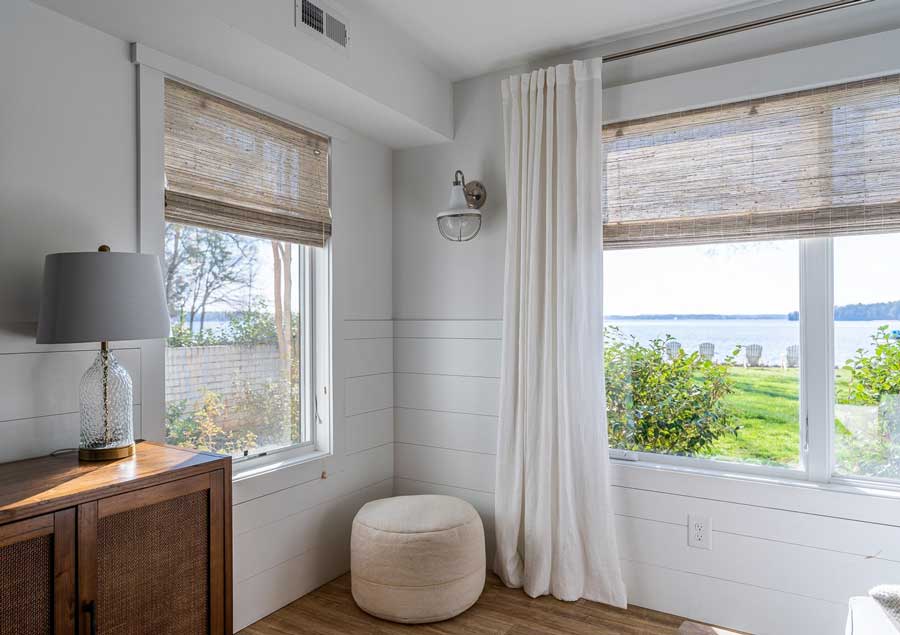
Provenance® Woven Wood Shades with Custom Drapery
Sheer or light-filtering shades soften intense sunlight during the day without blocking views. Drapery can then be closed in the evening for full privacy. Options like top down, bottom up shades give even more flexibility, making layered treatments practical as well as beautiful.
Managing Large Windows & Open Floor Plans
Wide windows, tall ceilings, and sliding doors are common in Carolina homes—and they shine with layered treatments. Mounting drapery panels high and wide creates a sense of height, while shades handle everyday light control.
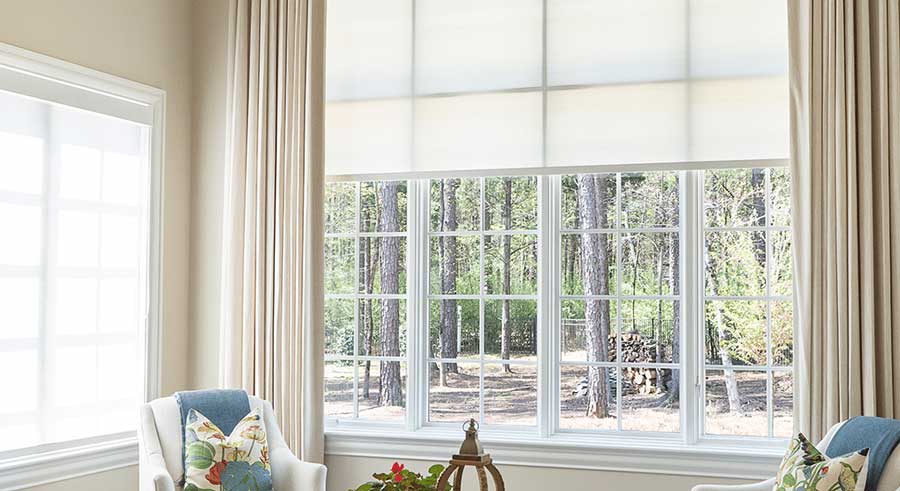
Designer Roller Shades with Custom Drapery Panels
Layering by Design Style
Layered window treatments can be adapted to almost any aesthetic:
- Modern: Sleek roller shades paired with solid or lightly textured drapery
- Transitional: Roman shades with tailored side panels
- Southern Coastal: Woven shades layered with breezy, light-toned drapery
- Minimalist: Soft sheers combined with low-profile shades for subtle dimension
The key is choosing fabrics and finishes that complement—not compete with—each other.
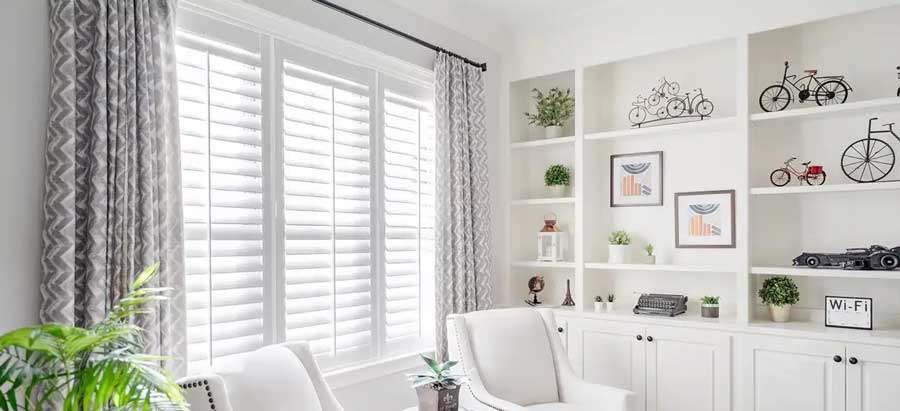
Custom Shutters with Side Drapery Panels
Hardware & Mounting Considerations
The right hardware makes all the difference. Double rods are a classic option, while track systems offer a cleaner, more architectural look. Finish choices—such as soft brass, matte black, or warm bronze—should coordinate with nearby lighting, fixtures, and furnishings for a cohesive result. This dining room features a double rod in matte black—a gorgeous way to tie in the nearby chandelier.
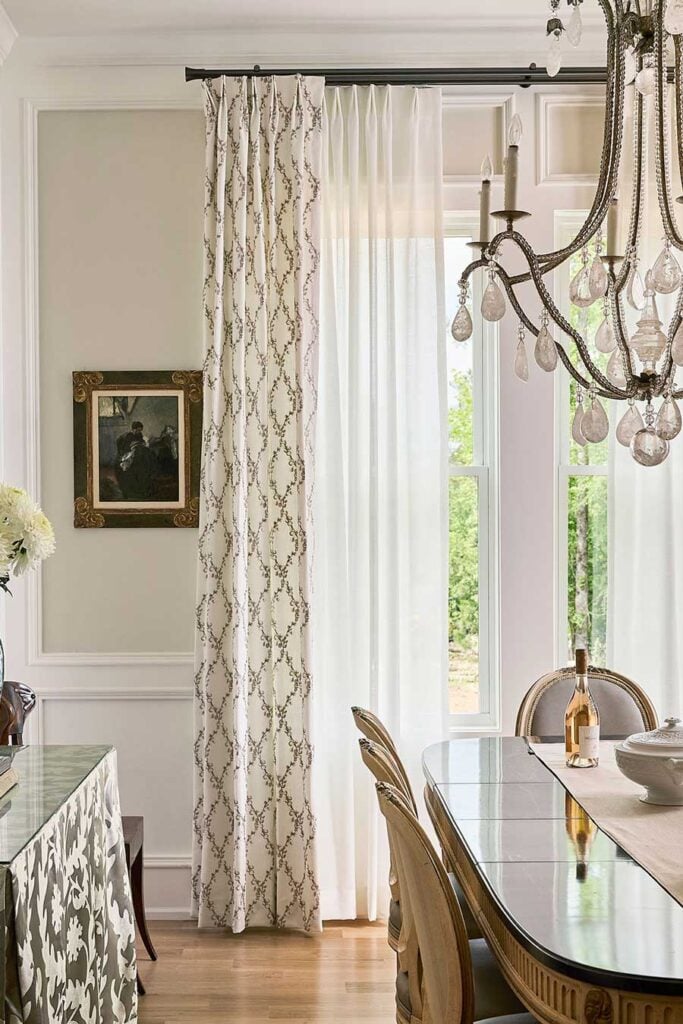
Matte Black Hardware with Double Rods; Pinch Pleat Drapery in One Patterned Panel, One Sheer Panel
Layering with Motorized Control
Motorized shades are especially useful for larger openings, allowing you to adjust coverage effortlessly as the sun shifts throughout the day. Layering keeps expansive spaces feeling intentional rather than overwhelming. Motorized drapery systems are also available, and they can be concealed entirely, allowing the layers to move smoothly and quietly.
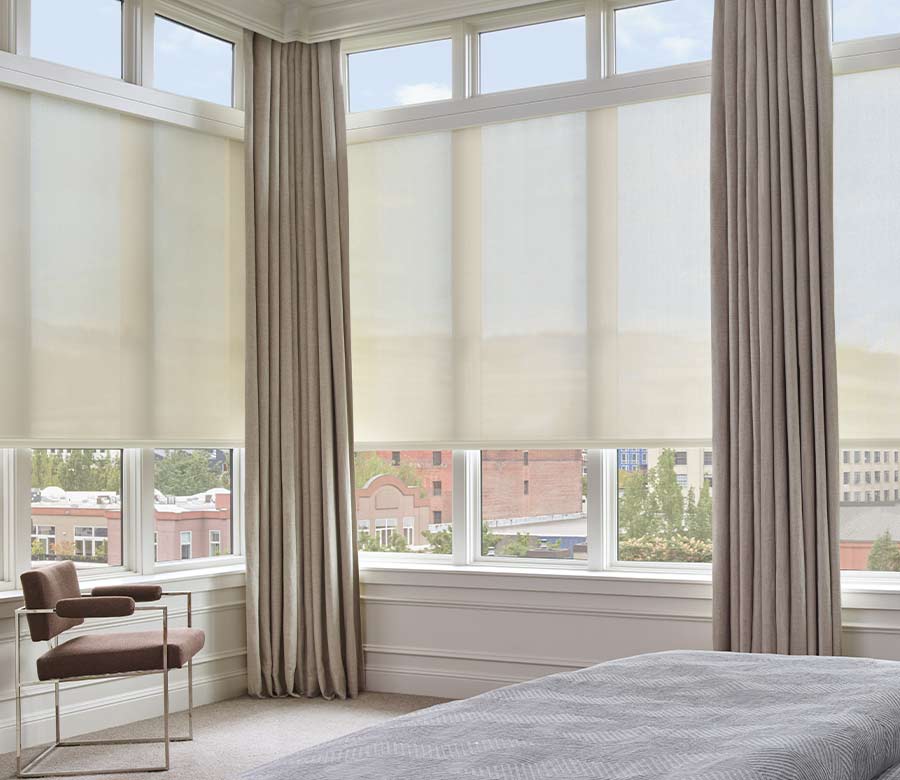
Designer Roller Shades with PowerView® Automation, Layered with Custom Side Drapery Panels
Ready to Layer Your Windows?
Layering drapery and shades is one of the most effective ways to elevate your home while improving comfort and functionality. If you’re ready to explore custom solutions designed for your space and lifestyle, schedule a free in-home drapery consultation, and let our experts help you create a look that feels effortless.